Design & Technology: Product Design.
A Level Product Design is a creative, practical and technical subject that develops students' understanding of how products are designed, manufactured and developed to meet the needs of users and society.
Course overview
This subject is offered as a two-year A Level course.
A Level Product Design is a creative, practical and technical subject that develops students' understanding of how products are designed, manufactured and developed to meet the needs of users and society.
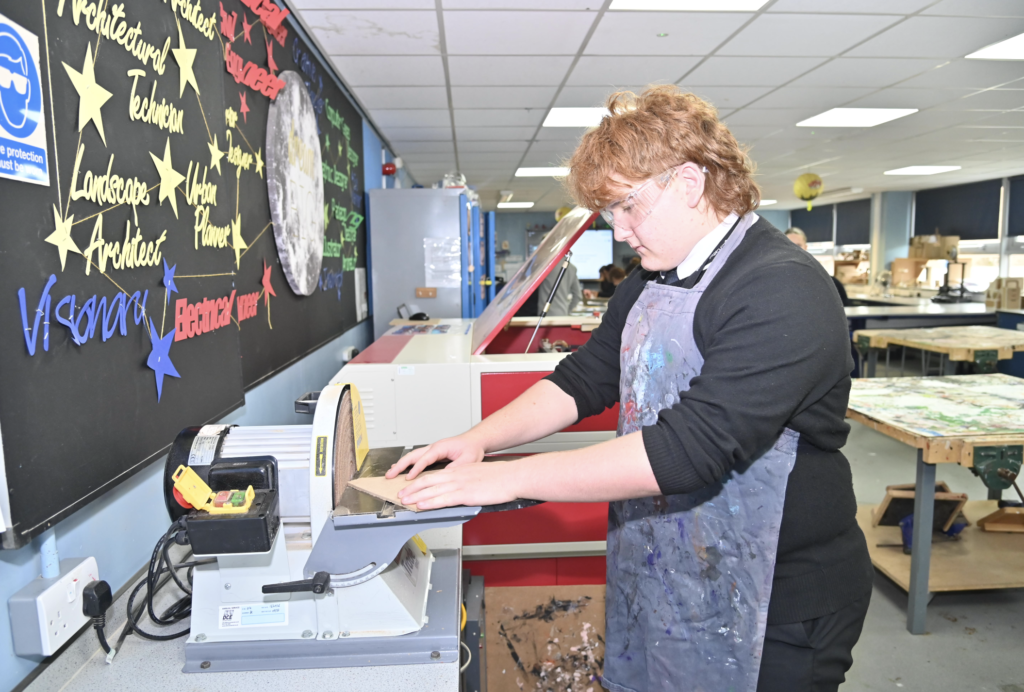
Throughout the course, you will explore a wide range of materials, manufacturing processes, design principles and emerging technologies. You will develop your ability to solve real-world problems through creative thinking, practical experimentation, computer-aided design (CAD) and high-quality manufacturing.
In Year 12, you will complete a range of practical projects designed to develop your skills and understanding of materials, tools, equipment and manufacturing techniques. These projects will prepare you for the independent design and make project undertaken in Year 13.
During Year 13, you will have the opportunity to identify and investigate a design problem of your own choosing, developing an innovative solution through research, designing, modelling, prototyping, manufacturing and evaluation.
What you'll explore
Discover the knowledge and skills you'll develop throughout this course.
- The AQA A Level Product Design course combines theoretical knowledge with practical design and manufacturing skills
- Assessment consists of two written examinations and one substantial independent design and make project
How is the course structured?
The AQA A Level Product Design course combines theoretical knowledge with practical design and manufacturing skills.
Over the two years, you will study a range of materials, including timbers, metals, polymers, papers and boards, as well as modern and smart materials. You will investigate how products are manufactured using traditional workshop techniques and modern industrial processes, including CAD/CAM, laser cutting and 3D printing.
You will also explore the work of influential designers and design movements, consider the environmental and social impacts of product development, and understand how commercial products are designed for different markets.
Mathematical and scientific principles are integrated throughout the course, helping you understand forces, materials, structures and the technical requirements of successful products.
Assessment consists of two written examinations and one substantial independent design and make project.
Entry requirements
- Although studying GCSE Design and Technology provides a useful foundation, students with a strong interest in design, engineering and practical problem-solving may also find the course suitable, subject to the school's entry requirements.
How you'll be assessed
Explore examination papers, coursework and practical assessments.
Assessment breakdown
A Level Assessment
Component 1: Paper 1 – Technical Principles
Weighting: 30% of A Level | Written examination: 2 hours 30 minutes | 120 marks
This examination assesses your knowledge and understanding of the technical principles involved in designing and manufacturing products.
Topics include materials and their properties, manufacturing processes, modern and industrial technologies, product functionality, quality control and the application of mathematical and scientific principles.
Questions include a mixture of short-answer and extended-response questions, requiring you to demonstrate technical knowledge and apply your understanding to practical design situations.
Component 2: Paper 2 – Designing and Making Principles
Weighting: 20% of A Level | Written examination: 1 hour 30 minutes | 80 marks
This examination focuses on the principles of designing and making products, including how designers respond to the needs of users and the wider world.
You will explore design methods, the work of influential designers, design movements, environmental and ethical considerations, commercial manufacturing and product development.
The examination includes questions based on product analysis, practical application of design knowledge and extended written responses.
Component 3: Non-Exam Assessment (NEA) – Practical Application of Technical Principles, Designing and Making Principles
Weighting: 50% of A Level | Coursework: 100 marks
The Non-Exam Assessment is an independent design and make project that allows you to demonstrate your creativity, technical understanding and practical manufacturing skills.
You will identify a genuine design problem or opportunity, investigate the needs of a specific user or client, and develop an innovative product that addresses those needs.
Your project will involve research, design development, modelling, testing, manufacturing and evaluation. You will produce a comprehensive digital portfolio documenting your design journey, supported by evidence of practical experimentation and decision-making.
The project will result in a high-quality final prototype that is tested and evaluated against your original design requirements.
Preparation for the NEA takes place throughout Year 12, with the main project beginning towards the end of Year 12 and continuing into Year 13.
Where could Design & Technology: Product Design take you?
Explore further study, career opportunities and the skills this subject can develop.
Progression Routes
A Level Product Design provides an excellent foundation for further education, apprenticeships and careers within the creative, design, manufacturing and engineering industries.
Possible progression routes include:
Product Design and Industrial Design
Mechanical and Manufacturing Engineering
Architecture and Architectural Technology
Automotive and Aeronautical Engineering
Furniture and Interior Design
Computer-Aided Design (CAD)
Graphic Design and Creative Industries
Design Engineering and Product Development
Advanced Manufacturing and Technology
Students can progress to university degree courses, degree apprenticeships, higher apprenticeships or employment within design and engineering industries.
Additional course information
Is there anything else I should know?
A Level Product Design is particularly suited to students who enjoy creative problem-solving, practical work, designing, engineering and understanding how everyday products are developed.
The course requires a combination of creativity, independent thinking, technical knowledge and practical manufacturing skills. Students should be prepared to develop their ideas through experimentation, accept feedback and refine their designs to achieve successful outcomes.
Although studying GCSE Design and Technology provides a useful foundation, students with a strong interest in design, engineering and practical problem-solving may also find the course suitable, subject to the school's entry requirements.
Students considering university courses in Product Design, Architecture or Engineering may benefit from combining Product Design with Mathematics, Physics, Art and Design, Business Studies or Computer Science, depending on their intended progression route.
Your next chapter starts here.
Find your direction, discover your subjects and join SJP Sixth Form.